
Tax Planning vs Tax Preparation: Key Differences for Business Owners
Tax planning vs tax preparation: one looks back, the other looks ahead.
Here's the thing most business owners learn the hard way.
You hand your CPA a pile of documents in March.
They tell you what you owe.
You think, "Wait, could I have paid less?"
Maybe.
But by then, it's too late to change much.
I've seen this play out a lot.
So let's clear it up.
Tax Planning vs Tax Preparation: The Quick Answer

Tax preparation is filing your return.
You gather your numbers, fill out the forms, and send them in.
It's about the past.
Tax planning is making smart moves during the year.
You look at your income, expenses, and goals, then act before the year ends.
It's about the future.
Think of it like this.
Preparation is the scoreboard.
Planning is the game plan.
Tax Preparation vs Tax Planning Side by Side
| Tax Preparation | Tax Planning | |
|---|---|---|
| When it happens | After the year ends | All year long |
| Main goal | File accurately and on time | Lower what you owe legally |
| What you get | A completed tax return | A strategy and a plan |
| Looks at | What already happened | What's coming next |
| Can it change your bill? | Not much | Yes, if you act in time |

One is required.
The other is optional but powerful.
What Is Tax Preparation?
Tax preparation is the filing side of taxes.
It usually covers:
• Gathering records: W-2s, 1099s, receipts, and bank statements
• Filling out forms: federal, state, and business returns
• Filing on time: and fixing mistakes if the IRS sends a notice
A clean return matters.
Mistakes can mean penalties and headaches.
But here's the catch.
Preparation works with the numbers you bring.
It doesn't change them.
What Is Proactive Tax Planning?
Proactive tax planning means thinking about taxes before they're due.
Instead of asking "what do I owe?", you ask "what can I do now?"
That can include:
• Estimating your tax bill during the year, so nothing surprises you
• Timing income and expenses so they land in the right year
• Reviewing retirement contributions while you can still make them
• Checking your business structure to see if it still fits
• Planning big purchases before December 31 rolls around
Many of these moves have a year-end deadline.
Not an April deadline.
So if you wait until filing season, some doors are already closed.
Want to see how this works in practice?
Check out these tax planning services.
Or try proactive tax planning with HeyDrew to get ahead of your bill.
A Coffee-Chat Example
Picture this.
Two friends run similar small businesses.
Both have a strong year.
Friend one waits until March to talk to their CPA.
The return gets filed.
The bill is what it is.
Friend two checks in during the fall.
They look at their numbers, review their options, and make a few moves before December 31.
Same business.
Same hard work.
Different timing.
That's the whole difference.
How Tax Planning and Tax Preparation Work Together
You don't pick one.
You need both.
Here's how they fit:
1. Plan first. Make smart moves during the year.
2. Prepare second. File your return with the final numbers.
3. Review third. Look at what worked and adjust for next year.
One important note.
Planning does not replace filing.
You still have to file your return.
Planning just helps make sure the return you file is better.
If you're a small business owner, our guide on small business tax planning goes deeper.
Who Does What? CPA, Tax Strategist, or Both?
The roles overlap, but they're not the same.
• CPA: usually focuses on accuracy, compliance, and filing
• Tax strategist: focuses on finding ways to lower your tax bill ahead of time
• Both together: covers the past and the future
Curious how they compare?
Read about what a tax strategist does.
Then see the breakdown of tax strategist vs CPA.
Year-Round Tax Planning: A Simple Schedule
You don't need to live and breathe taxes.
A few check-ins is a good start.
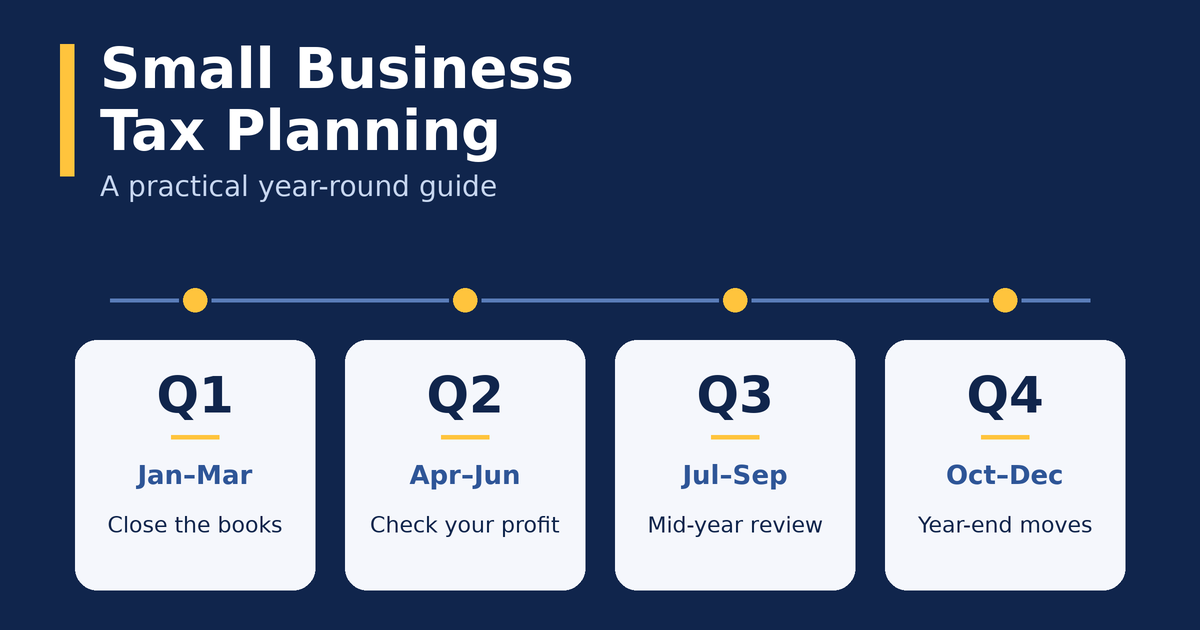
| When | What to Do |
|---|---|
| Early in the year | Review last year's return and set tax goals |
| Mid-year | Check your income and estimated tax payments |
| Late in the year | Look for year-end moves before December 31 |
| Filing season | Prepare and file your return |
That's year-round tax planning in a nutshell.
Small habits, done early.
If you want help building this rhythm, year-round tax planning with HeyDrew is one place to start.
When Should You Look at Your Taxes Earlier?
Talk to someone sooner if:
• You own a business or work for yourself
• Your income jumped or dropped this year
• You're planning a big purchase or hiring
• Your tax bill keeps growing and you don't know why
• You're thinking about changing your business structure
If any of those sound like you, don't wait for spring.
Frequently Asked Questions
What is the difference between tax planning and tax preparation?
Tax preparation files your return after the year ends.
Tax planning uses strategies during the year to lower what you owe later.
Can my tax preparer also do tax planning?
Sometimes.
Some CPAs offer both, but not all do.
Ask upfront if planning is included.
When should I start tax planning?
The sooner the better.
Early in the year is ideal, with check-ins later on.
Many year-end options end on December 31.
Is tax planning only for business owners?
No.
Individuals, investors, and retirees can benefit too.
Business owners just tend to have more options.
Does tax planning replace filing my return?
No.
You still need to file.
Planning helps you make better decisions before you do.
Is tax planning legal?
Yes.
It uses legal strategies and the rules as written.
Tax evasion is something different, and it's illegal.
Final Thoughts on Tax Planning vs Tax Preparation
Preparation tells you what happened.
Planning helps you shape what happens next.
You need both.
But if you only think about taxes once a year, you're missing the part that can actually move the needle.
Start earlier.
Ask better questions.
And if you want a head start, explore proactive tax planning with HeyDrew.
That's the real difference in tax planning vs tax preparation.
This article is for general information only and isn't tax, legal, or financial advice. Talk with a qualified tax professional about your situation.





Comments
Leave a Comment
Your email address will not be published. Required fields are marked *