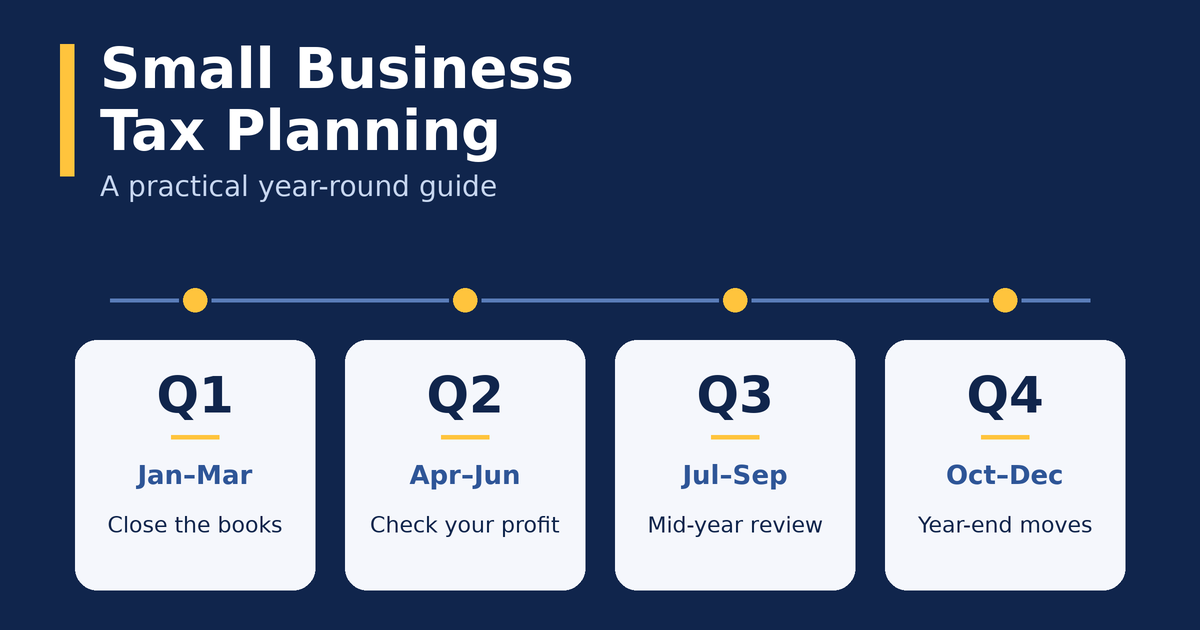
Small Business Tax Planning: A Practical Year-Round Guide
Small business tax planning sounds boring until you get a tax bill you didn’t see coming.
I’ll keep this simple.
Here’s what I hear from owners all the time:
• When should I even start thinking about taxes?
• Am I paying more than I should?
• Do I need an accountant, or can I wing it?
• What am I missing?
Fair worries.
Most owners deal with taxes once a year, in a panic.
That’s the problem.
Good planning isn’t a once-a-year event.
It’s a few small checks, four times a year.
This guide gives you that checklist in plain English.
And if you want someone to plan with you all year, I’ll show you where HeyDrew fits.
This is general information, not tax advice. Talk to a qualified professional about your situation.
Small Business Tax Planning in 60 Seconds
No time?Here’s the short version.
• Plan before the year ends. Filing only reports what already happened.
• Check in four times a year. Tie each check-in to an estimated payment date.
• Track income, expenses and mileage. No records, no deduction.
• Set cash aside from every payment. Use a separate tax account.
• Call a pro before big moves. Hiring, buying or changing your entity.
• Want year-round help? HeyDrew offers proactive tax planning for entrepreneurs.
Small Business Tax Planning: What It Is (and What It Isn’t)
Small business tax planning means making smart choices before the year ends, not after.
It’s about timing, records and structure.
The goal is simple.
No surprises.
And no missed savings you’re legally entitled to.
Here’s what it’s not.
It’s not filing your return.
Filing reports what already happened.
Planning shapes what happens next.
Think of it like this.
Filing is the scoreboard.
Planning is the game plan.
You need both.
Small Business Tax Planning by Business Structure
Your structure shapes your taxes.
Here’s the plain-English version.
These are general descriptions, not advice for your case.
• Sole proprietor or single-member LLC. Business profit flows to your personal return. You also owe self-employment tax.
• S corp. Owners who work in the business generally must pay themselves a reasonable salary.
• C corp. The company files and pays its own tax, separate from you.
Which one fits you?
That depends on your income, your goals and your state.
This is a big call.
Make it with a pro, and make it before the year closes.
Want planning support that fits your setup?
See how HeyDrew approaches tax planning.
Why Year-Round Tax Planning Beats the April Scramble
By the time you file, the year is closed.
Most big choices are already locked in.
Year-round tax planning keeps you in control.
Here’s what you get:
• You see tax bills coming. No more April shock.
• You fix problems early. Missing records, late payments, messy books.
• You time big purchases. You think about taxes before you spend.
• You avoid penalties. Paying on time beats paying extra.
Here’s a made-up example.
Picture a freelance designer who has a great year.
She doesn’t track anything until March.
Then she learns she owes a lot, and she hasn’t saved for it.
A quarterly check would have flagged the problem in June.
Same business.
Same income.
A lot less stress.
How to Build Your Small Business Tax Plan in 5 Steps
Not sure where to start?
Start here.
Five steps.
No fancy tools.
1. Know your numbers. Pull last year’s return and your current profit and loss.
2. Pick one system. One place for income, expenses and mileage.
3. Set a calendar. Add your estimated payment dates and four check-ins.
4. Set cash aside. Move a slice of every payment into a tax account.
5. Review every quarter. Compare your plan to what actually happened.
That’s the whole plan.
You can improve it later.
Starting beats perfecting.
Want help keeping the plan on track?
An AI-assisted tax planning option may help you organize it.
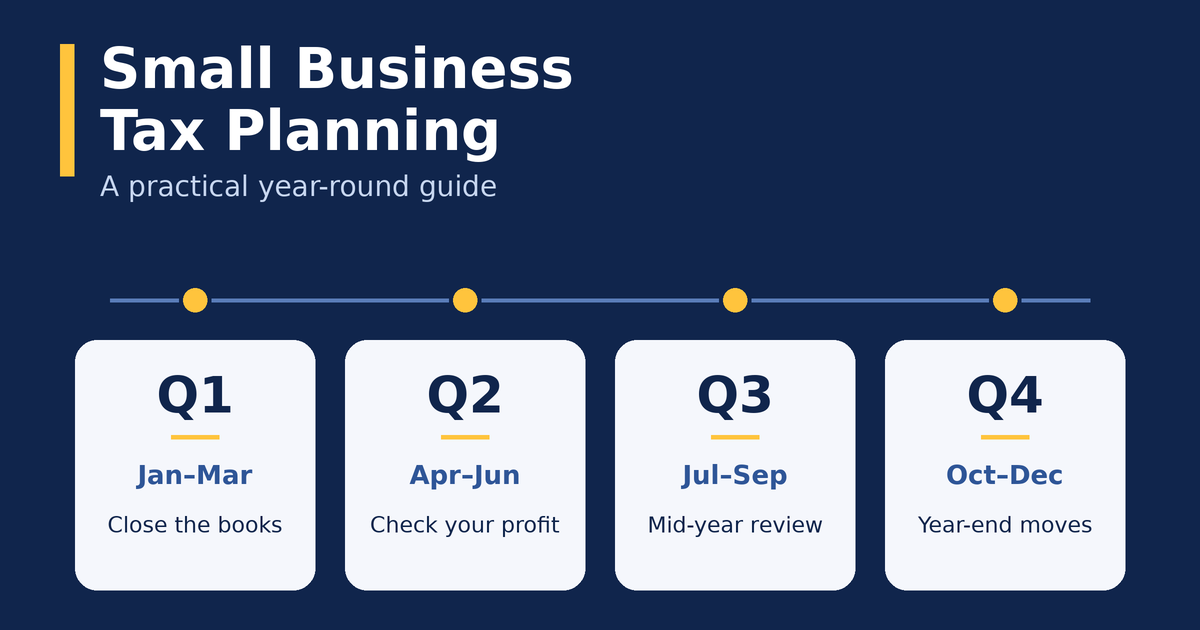
Small Business Tax Planning Checklist: Quarter by Quarter
Here’s the checklist.
Put it on your calendar.
The estimated payment dates below are for the 2026 tax year, per the IRS.
They can shift when a date lands on a weekend or holiday, so check IRS.gov.
Q1 (January to March): Close the Books and Set the Plan
• Wrap up last year. Reconcile your accounts and gather your records.
• Review your numbers. What did you earn, and what did you spend?
• Check your business structure. Does your entity still fit how you run things?
• Set up one tracking system. Income, expenses and mileage in one place.
• Mark April 15. That’s the first estimated payment date for 2026.
Q2 (April to June): Check Your Profit
• Compare profit to your plan. Are you ahead or behind?
• Update your tax estimate. Your income may have changed.
• Pay by June 15. That’s the second estimated payment date for 2026.
• Review payroll. Did you hire anyone new?
• Keep your mileage log current.
Q3 (July to September): Do a Mid-Year Review
• Project your full-year income. A rough number beats no number.
• List big purchases you’re considering. Ask how they affect your taxes first.
• Ask about retirement plan options. Some have set-up deadlines, so don’t wait.
• Pay by September 15. That’s the third estimated payment date for 2026.
• Call your pro now. There’s still time to act.
• Prep your questions. An AI-assisted tax-planning option may help you get organized.
Q4 (October to December): Make Your Year-End Moves
• Review income and expenses before year-end.
• Decide on timing for big purchases and invoices. Do it with your pro.
• Check for credits you may qualify for.
• Get your records in order. Receipts, invoices, logs.
• Plan for January 15, 2027. That’s the fourth estimated payment date for the 2026 tax year.
That’s it.
Four check-ins.
One simple routine.
Want help keeping this going all year?
HeyDrew offers proactive, year-round tax planning for entrepreneurs.
Review tax-planning service options.
Ask yourself these four questions every quarter
• Did my income change?
• Did my expenses change?
• Did I hire, buy or change anything big?
• Is my tax account on track?
If you answer yes to any of them, update your plan.
Small Business Tax Planning for Estimated Taxes: No More Surprises
Estimated taxes trip up a lot of owners.
Here’s the plain version.
Nobody takes tax out of your business income for you.
So you pay it in pieces during the year.
Here’s what the IRS says:
• Individuals, including sole proprietors, partners and S corporation shareholders, generally must pay estimated tax if they expect to owe $1,000 or more when they file.
• Corporations generally must pay if they expect to owe $500 or more.
• For the 2026 tax year, payments are due April 15, June 15, September 15 and January 15, 2027.
If you’re self-employed, you also owe self-employment tax.
That covers Social Security and Medicare.
Here’s a habit that helps.
Every time you get paid, move a slice into a separate tax account.
Ask your pro what slice makes sense for you.
It’s one of the easiest ways to stay out of trouble.
What if you miss a payment or pay too little?
Penalties can apply.
Ask your pro about the rules that protect you from underpayment penalties.
Don’t guess.
An AI-assisted option like HeyDrew may help you organize your questions.
It doesn’t replace a pro.
Want planning that goes beyond quarterly payments?
Get proactive tax planning with HeyDrew.
Small Business Tax Planning: Track Income and Expenses the Right Way
Good planning starts with good records.
You can’t deduct what you can’t prove.
Here’s what to track:
• Income. Every payment, every invoice.
• Expenses. Receipts, bills and bank statements.
• Mileage. Date, miles, and the business reason.
• Payroll. Wages, taxes and who got paid.
Which expenses count?
The IRS describes deductible business expenses as ordinary and necessary.
Ordinary means common in your line of work.
Necessary means helpful and appropriate for your business.
Common categories to check include:
• Home office
• Vehicle use
• Equipment and software
• Internet and phone
• Professional fees
Rules and limits apply to each one.
Our guide on small business tax deductions walks through them.
A quick word on mileage.
The IRS set the 2026 business mileage rate at 72.5 cents per mile.
Published reports say it rose to 76 cents per mile on July 1, 2026.
Check IRS.gov for the rate that applies to your miles.
Either way, you need a log.
Want a plan for your deductions all year, not just in April?
Explore HeyDrew’s tax planning for entrepreneurs.
Small Business Tax Planning for Payroll and Hiring
Hiring changes your taxes.
So plan before you add people.
Here’s what to think about:
• Payroll taxes. Employers have filing and payment duties.
• Employee or contractor? The label affects your forms and your taxes.
• The right forms. Employees get a W-2. Contractors usually get a 1099-NEC.
• A W-9 from contractors. Collect it before you pay them.
• State rules. They can differ from federal rules.
Here’s my warning.
Calling someone a contractor doesn’t make them one.
Misclassifying workers can cause real problems.
So ask a pro before you decide.
Hiring soon?
Start year-round tax planning with HeyDrew.
Small Business Tax Planning Around Big Business Changes
Some moves change your tax picture fast.
Plan these before you do them, not after:
• Changing your entity. For example, electing S corp status.
• Buying big equipment. Ask about Section 179 and bonus depreciation. Limits change, so check IRS.gov.
• Moving to another state. State taxes can change.
• Adding an owner or partner.
• Selling or closing the business.
The pattern is simple.
Big move, then call your pro.
Not the other way around.
Planning a big move?
Plan ahead with HeyDrew’s tax planning services.
Here’s another made-up example.
Picture a small shop owner who buys a lot of equipment in December.
He assumes it’ll cut his tax bill.
But he never asked how the rules treat it, or whether he had the cash flow to back it up.
A quick call before buying would have answered both.
The lesson: ask first, buy second.
Small Business Tax Planning With Credits: Don’t Leave Money Behind
Deductions and credits are not the same thing.
A deduction lowers the income you pay tax on.
A credit lowers the tax itself.
Credits that may apply to small businesses include:
• Work Opportunity Tax Credit
• Small Business Health Care Tax Credit
• Disabled Access Credit
Eligibility rules are strict.
Some need paperwork up front.
So don’t guess.
Our guide on small business tax credits explains how to check.
Then confirm with a pro.
When to Get Professional Help With Small Business Tax Planning
You can start on your own.
But some moments call for backup.
Get help if:
• Your income jumped.
• You hired your first employee.
• You operate in more than one state.
• You’re changing your entity.
• You’re planning a big purchase or sale.
• Your records are behind.
• You got a notice from the IRS or a state.
So who do you call?
Here’s the short version:
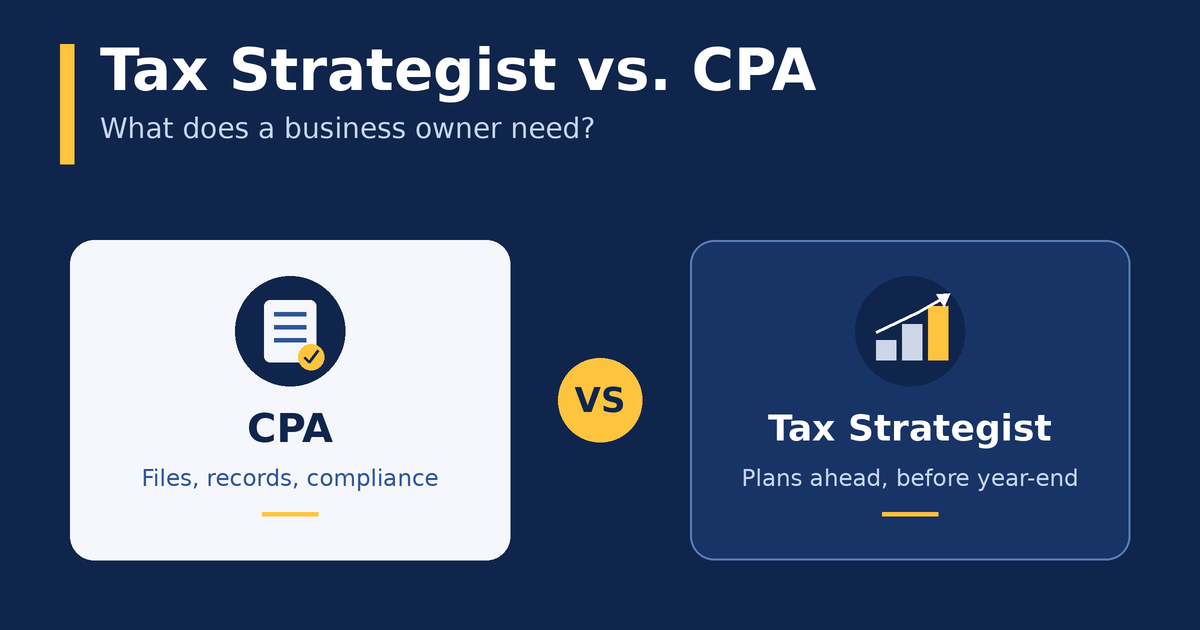
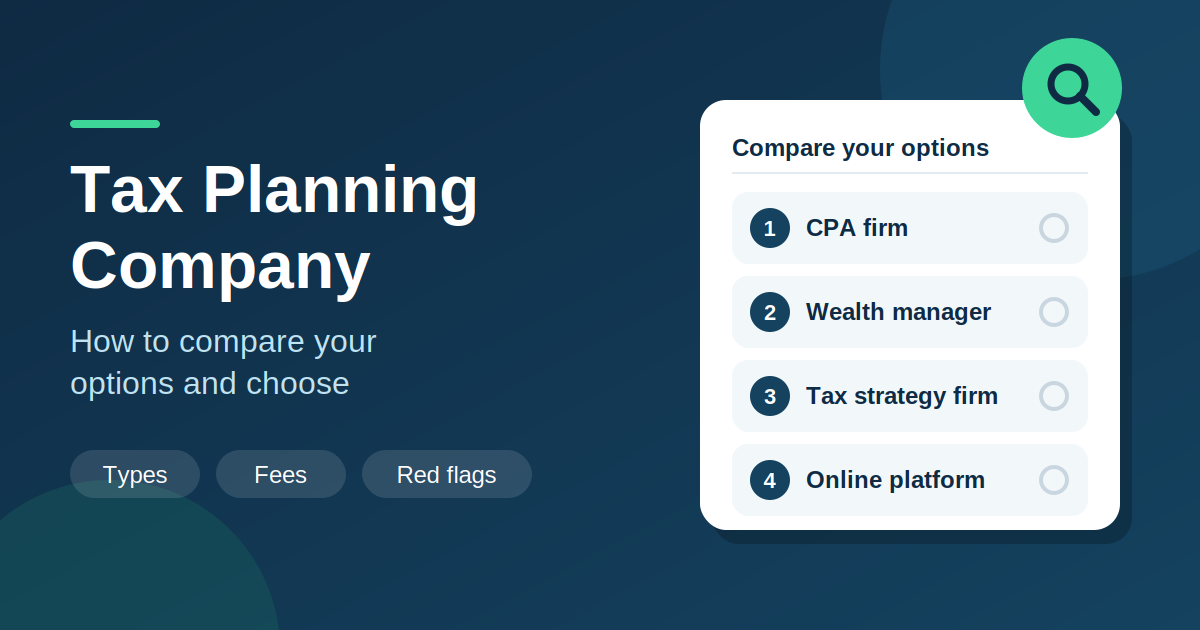
• CPA. Prepares returns, keeps records and handles compliance.
• Enrolled agent (EA). A tax pro licensed by the IRS.
• Tax strategist. Plans ahead. A tax strategist may be a CPA, EA, attorney or someone with no credential.
Want to go deeper on planning help?
Look at tax strategy services.
Or compare tax planning services.
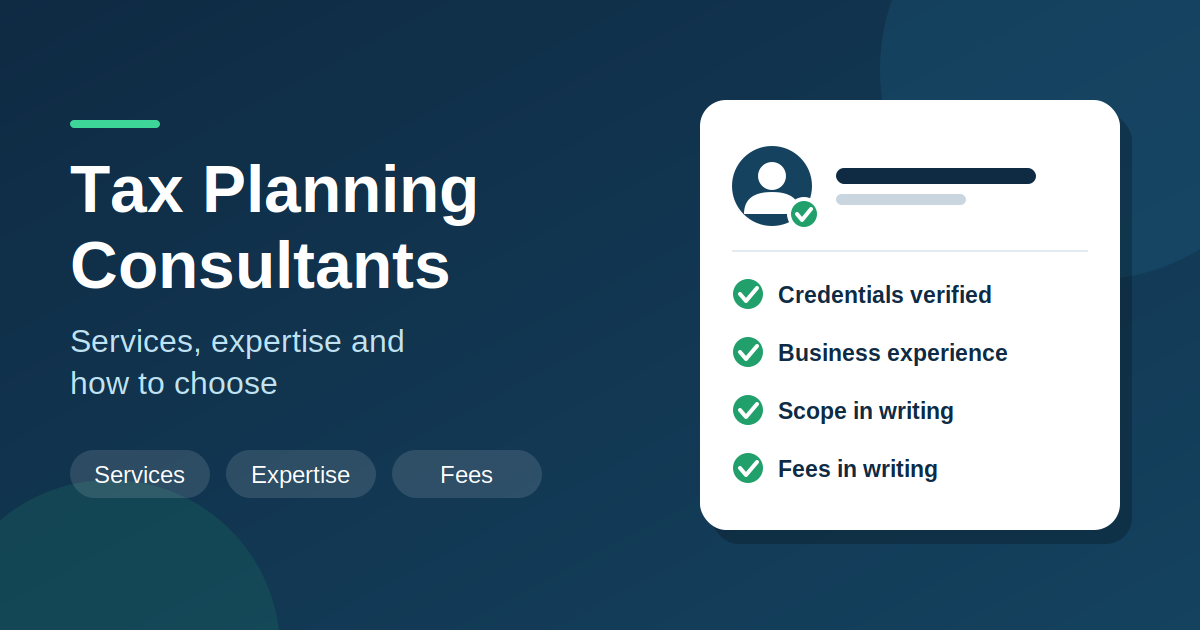
Whoever you pick, ask three things:
1. What credential do you hold?
2. What exactly will you do for me?
3. Who prepares and signs my return?
And walk away from anyone who promises guaranteed savings.
Nobody can promise that without knowing your full picture.
If you want planning support next to your CPA, HeyDrew is one option.
It may complement a CPA.
It doesn’t replace one.
Review tax-planning service options.
Small Business Tax Planning With HeyDrew: Year-Round Help for Entrepreneurs
Let’s make this concrete.
If you want year-round help, I’d look at HeyDrew.
Here’s what its website says it does:
• It offers proactive tax planning services for entrepreneurs.
• It puts tax strategies and planning moves in place throughout the year.
• It describes its approach as AI-driven with human review.
That lines up with what this guide is about.
Plan before the year ends, not after.
A few honest notes:
• That’s how HeyDrew describes itself. Check the details yourself.
• I couldn’t find published pricing, so check its site for current rates.
• Results vary, and every strategy has to follow IRS and state rules.
• It may complement your CPA.
Small Business Tax Planning Mistakes to Avoid
• Waiting until April. By then, most choices are locked in.
• Mixing personal and business money. It makes records messy and deductions hard to prove.
• Skipping estimated payments. Late payments can mean penalties.
• Guessing at deductions. No records, no deduction.
• Copying a friend’s strategy. Their business isn’t yours.
• Buying something just for the write-off. You still spent the money.
• Ignoring state taxes. They can add up.
One mistake is fixable.
A habit of them gets expensive.
Want year-round support to avoid them?
HeyDrew is one option that may complement your CPA.
Get year-round tax planning with HeyDrew.
Next Step: Keep Your Tax Planning Going All Year
Start with the checklist.
Then decide how much help you want.
If you want year-round planning help, HeyDrew is where I’d start looking.
It may complement your CPA.
Review tax-planning service options.
I couldn’t find published pricing for HeyDrew, so check its site for current rates.
Results vary by situation.
Nothing here is a promise of savings.
Disclosure: this is an affiliate link. If you sign up through it, I may earn a commission at no extra cost to you.
Small Business Tax Planning FAQs
What is small business tax planning?
It’s making smart tax choices throughout the year.
It covers income, expenses, estimated payments, payroll and big business changes.
The goal is no surprises and no missed savings.
When should I start tax planning for my small business?
Now.
The best time is early in the year.
But a mid-year or year-end check still helps.
Earlier gives you more options.
How often should I review my taxes?
I’d do it quarterly.
That’s four short check-ins a year.
Tie them to your estimated payment dates.
Do I need an accountant for small business tax planning?
Not always at the start.
Simple businesses can begin with good records and the checklist above.
Bring in a pro when things get more complex.
See the list in the section on getting professional help.
What’s the difference between tax planning and tax preparation?
Preparation files your return after the year ends.
Planning shapes your choices before it ends.
Many owners need both.
Can AI help with small business tax planning?
It may help you organize questions and compare options.
It doesn’t replace a licensed professional.
HeyDrew describes its service as AI-driven with human review.
If you want to try it, HeyDrew is one to consider.
How do I plan taxes as a sole proprietor?
Keep clean records.
Set cash aside from every payment.
Pay estimated taxes on time if you expect to owe.
Review your numbers every quarter.
Is it too late to start tax planning this year?
Usually not.
Some choices are locked once the year ends.
But you can still tidy records, check estimated payments and ask a pro what’s left.
The sooner you act, the more options you keep.
Do the four check-ins, and small business tax planning stops being a scramble and becomes a habit.





Comments
Leave a Comment
Your email address will not be published. Required fields are marked *