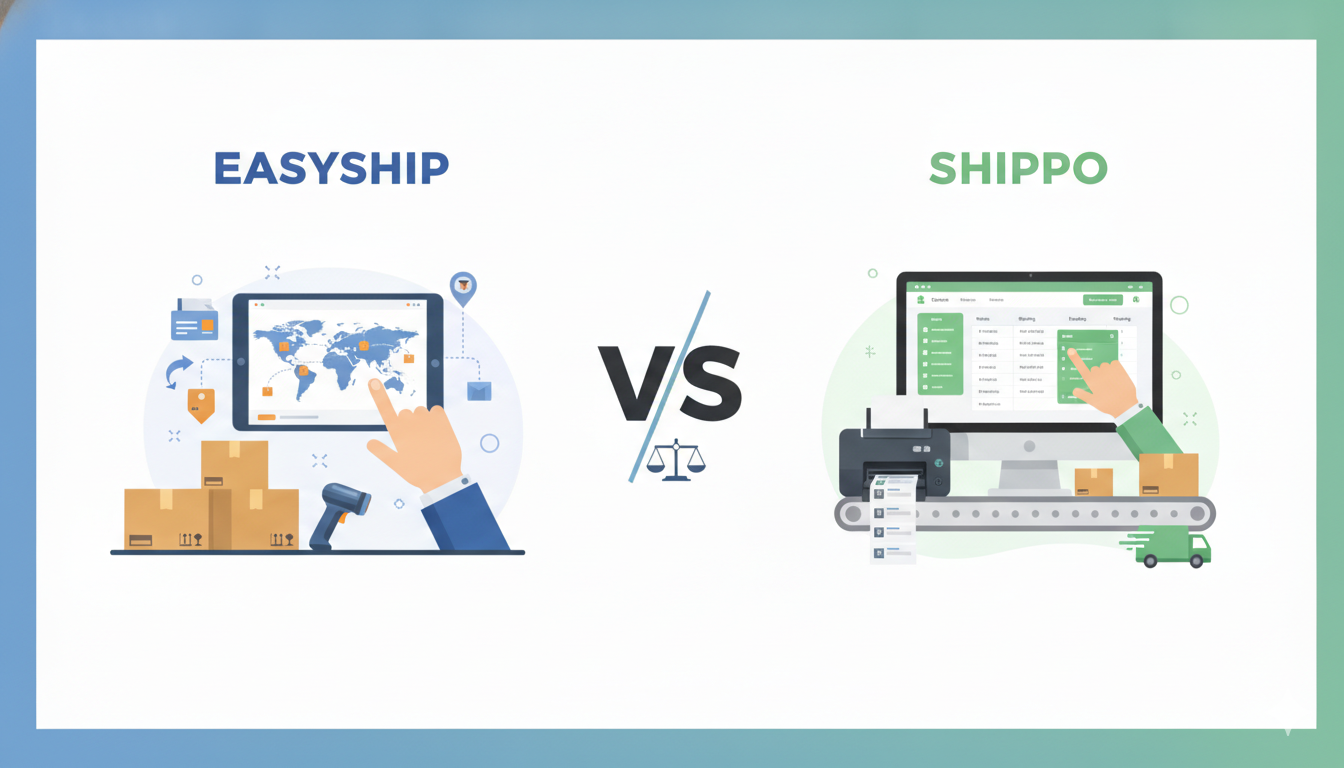
Easyship vs ShipStation: Which Shipping Software Actually Wins in 2026?
If you are stuck on the Easyship vs ShipStation debate, you are not alone.
I have been there. Tabs open, pricing pages up, Reddit threads in the background, still not sure which one to pick.
Both tools promise to make shipping easier. Both have solid reviews. Both cost real money.
But they are built for very different types of businesses.
Picking the wrong one will cost you time, money, and headaches you did not sign up for.
I have used both. Here is the honest breakdown.
The Quick Answer
Choose Easyship if:
- You ship internationally
- You want automatic tax and duty calculations
- You do not have negotiated carrier rates yet
- You want to get started fast without a steep learning curve
Choose ShipStation if:
- You ship high volumes domestically inside the US
- You already have your own carrier accounts
- You need advanced automation across multiple warehouses
- You are running a complex, multi-channel operation
Still with me? Good. Let us go deeper.
What Is Easyship?
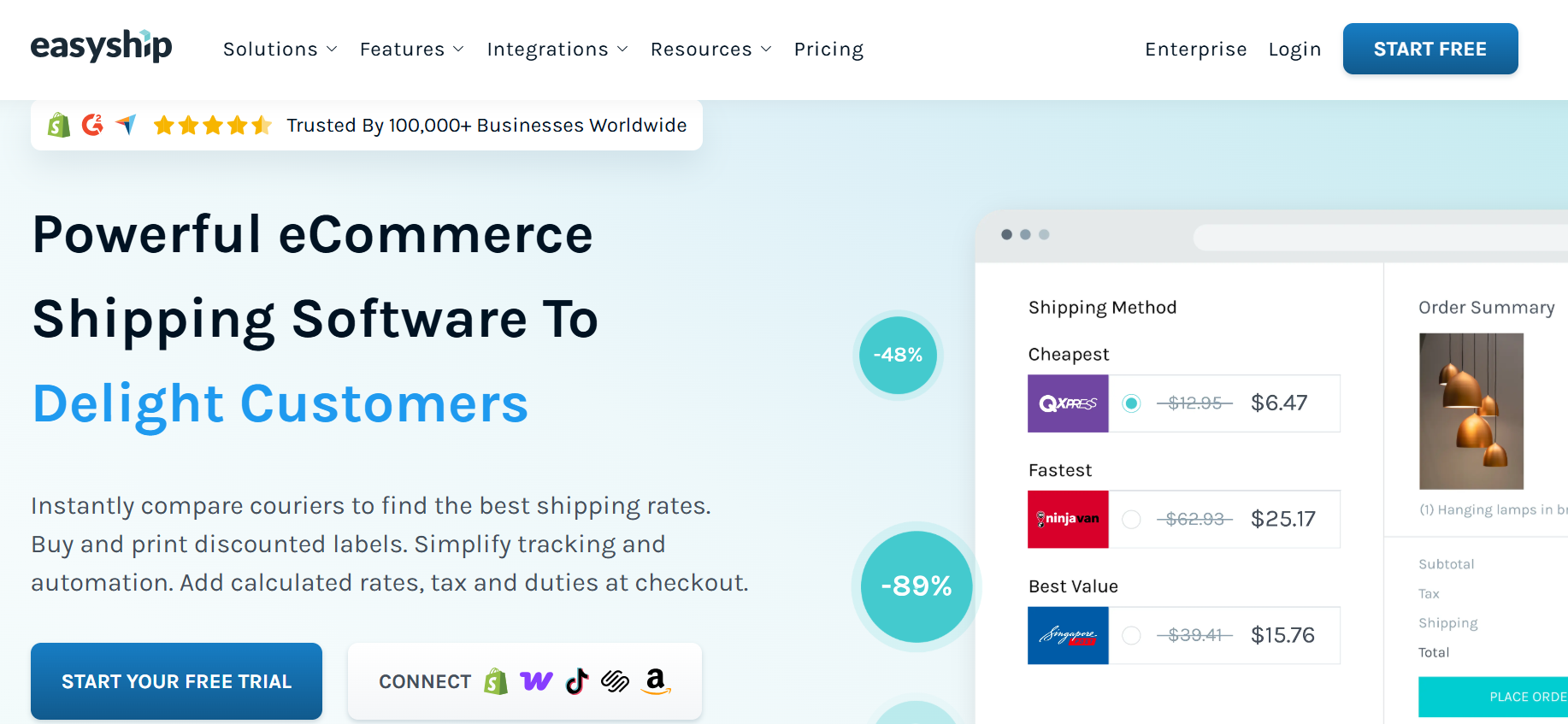
Easyship is a cloud-based shipping platform built for ecommerce brands that sell across borders.
It connects you to 250 plus global couriers including DHL, UPS, Aramex, SF Express, and Australia Post, all in one place.
The big selling point is this: you do not need to negotiate carrier rates yourself. Easyship has already done that. You plug in your store and start shipping.
It also handles the stuff that trips up most international sellers. Things like customs documentation, duty calculations, and landed cost estimates get handled automatically.
If you sell to customers in Canada, the UK, or the EU and you have ever had a package returned because of unpaid taxes, you already know why this matters.
Check out my full Easyship review here if you want to go even deeper on the platform.
What Is ShipStation?
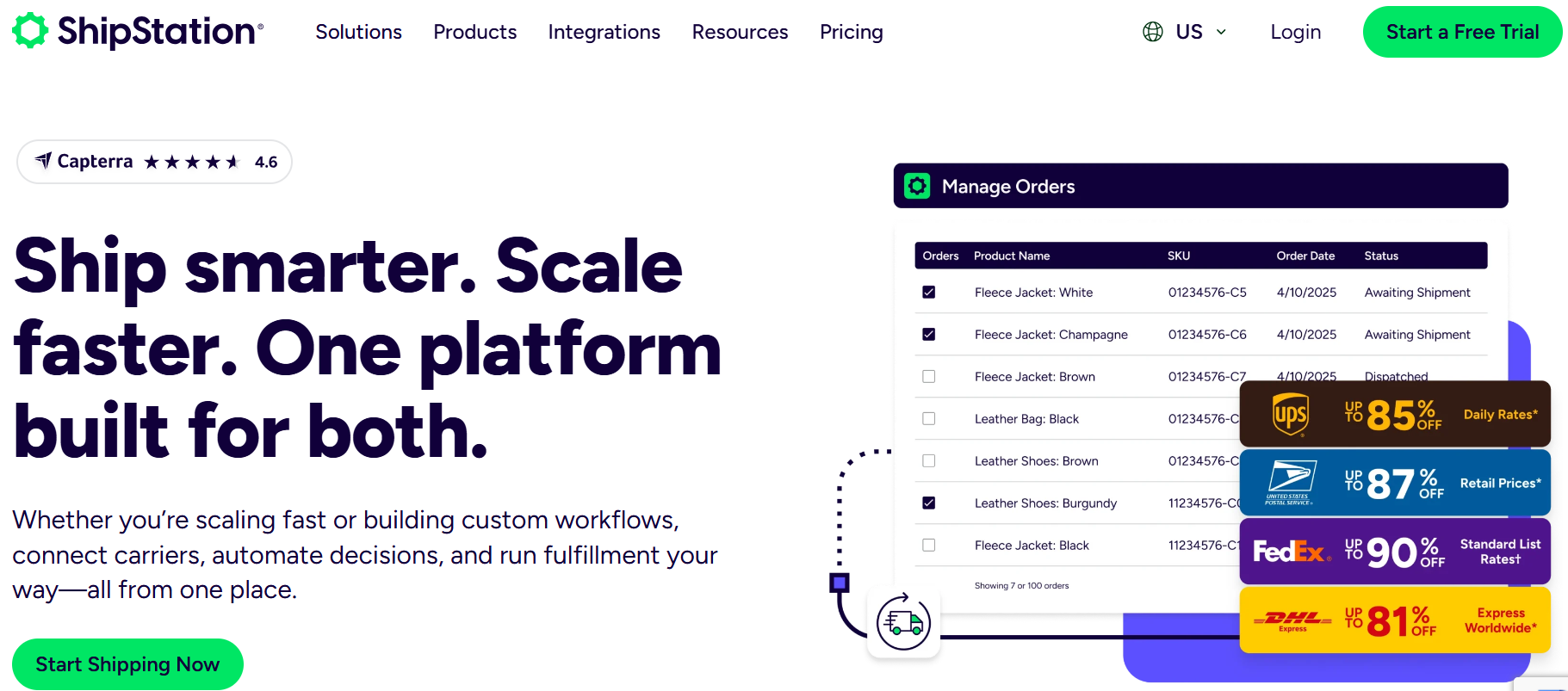
ShipStation is a shipping management platform built for scale.
It is the go-to tool for US-based ecommerce brands shipping high volumes domestically.
It connects to 50 plus carriers including USPS, UPS, FedEx, and DHL, and it supports your own negotiated carrier accounts.
The platform is strongest in automation. You can build conditional shipping rules, auto-route orders to warehouses, print labels in bulk, and integrate with 300 plus platforms including Shopify, Amazon, Walmart, QuickBooks, and NetSuite.
If you are moving thousands of orders a week and want your shipping to run on autopilot, ShipStation is built for exactly that.
ShipStation vs Easyship: Side-by-Side Comparison
Here is a quick look at how the two platforms stack up in a shipping software comparison:
| Feature | Easyship | ShipStation |
|---|---|---|
| Best For | International sellers | High-volume US operations |
| Starting Price | Free plan available | $14.99 per month |
| Carrier Support | 250 plus global couriers | 50 plus US-focused |
| Own Carrier Accounts | Not supported | Fully supported |
| Tax and Duty Estimates | Automated at checkout | Manual entry required |
| Customs Documentation | Auto-generated | Manual or third-party |
| Automation Rules | Basic | Advanced |
| Returns Portal | Customizable | Built-in |
| Integrations | 100 plus | 300 plus |
| Ease of Use | Easier | Steeper learning curve |
| Customer Support | Email and chat | Phone, chat, and email |
This shipping software comparison makes it pretty clear that each tool is built for a different type of seller. Let us break down the details.
Pricing: What Does Each Platform Actually Cost?
Easyship Pricing
Easyship runs a freemium model. You can start for zero dollars.
- Free plan covers up to 50 shipments per month and one store integration
- Plus plan is $29 per month and covers up to 500 shipments with branded tracking and automation
- Premier plan is $69 per month for stores shipping up to 2,500 packages monthly
- Enterprise pricing is custom
What I like about this is that even on the free plan, you get access to Easyship's pre-negotiated courier discounts. No setup fees. No per-shipment surcharges outside of courier costs. No need to bring your own rates.
For a small brand getting started with international shipping, that is a genuinely good deal.
ShipStation Pricing
ShipStation charges based on shipment volume and number of users.
- Starter plan is $14.99 per month for 50 shipments and 1 user
- Bronze is $29.99 per month for 500 shipments and 1 user
- Silver is $59.99 per month for 1,500 shipments and 2 users
- Gold is $99.99 per month for 3,000 shipments and 3 users
- Enterprise starts at $159.99 per month for 6,000 plus shipments and up to 10 users
The entry point is slightly higher than Easyship and costs scale up fast as your volume grows.
If you bring your own negotiated carrier rates though, you can offset a lot of that cost through per-shipment savings.
Pricing verdict: Starting out or shipping internationally? Easyship gives you more value from day one. Already have negotiated rates and ship high domestic volume? ShipStation pays off at scale.
Carrier Support: 250 Couriers vs 50
This is one of the biggest differences in any ShipStation vs Easyship comparison, and it matters more than most people realize.
Easyship Carrier Access
- 250 plus global couriers including DHL, UPS, Aramex, SF Express, Australia Post, and dozens of regional carriers
- Rates are pre-negotiated by Easyship, no carrier account setup needed
- Works well for plug-and-play international fulfillment
- You cannot use your own negotiated rates
If you are just starting out or expanding into new countries, this is a huge advantage. You skip the headache of setting up carrier accounts in every market you ship to.
ShipStation Carrier Access
- 50 plus carriers, primarily US-focused including USPS, UPS, FedEx, and DHL
- Supports your own carrier accounts
- Multi-warehouse routing built in
- Better fit for businesses with existing logistics relationships
If you have spent years negotiating rates with UPS or FedEx and you ship 5,000 plus packages a month, ShipStation lets you plug those rates straight in.
Carrier verdict: Easyship wins for global courier access. ShipStation wins if you have your own carrier relationships and ship mostly inside the US.
Automation: Where ShipStation Pulls Ahead
Nobody wants to manually process 3,000 orders a week.
Easyship Automation
- Basic rules like choosing a courier based on delivery zone or weight
- Auto-generates customs documentation
- Auto-selects the cheapest or fastest courier option
- Default shipping preferences at checkout
This covers the basics. For a small team or solo founder, it is probably enough. But once your operation gets complex with multiple SKUs, different fulfillment locations, and varied customer segments, you will start hitting limits.
ShipStation Automation
This is where ShipStation earns its price tag.
- Conditional workflows based on SKU, customer location, order value, weight, and more
- Auto-route orders to specific warehouses
- Trigger label printing automatically
- Sync inventory levels across platforms
- Tag and prioritize orders based on custom rules
One brand using ShipStation cut fulfillment time by 40 percent and saved 18 hours per week on manual tasks just by setting up automation rules. That is real operational leverage.
Automation verdict: For high volume and hands-off workflows, ShipStation's automation is genuinely in a different league. If you are smaller and just need the basics covered, Easyship handles it fine.
International Shipping and Customs: Easyship Wins
This section decides it for most international sellers.
Easyship International Tools
- Automated duty and tax calculations happen at checkout before the customer pays
- Customers see the full landed cost including import fees before they place the order
- Customs documentation is auto-generated, no manual forms needed
- Supports cross-border shipping to 220 plus countries and territories
Here is why this matters so much. When a customer in the UK orders from your US store, they owe VAT on import. If they do not know that upfront, they refuse the package or you lose them as a customer entirely.
Easyship shows customers the full cost at checkout. No surprises. No failed deliveries. No chargebacks.
A brand called Lexdray used Easyship to fulfill orders across 40 plus countries for a Kickstarter campaign. They reduced delivery errors by 90 percent and boosted on-time delivery by 30 percent. That is what transparent international shipping does for a business.
ShipStation International Capabilities
- Limited support for international tax
- Customs setup is manual or requires third-party tools
- No checkout-level duty estimation
- Works for occasional international orders but not built for global operations
If you ship internationally at any real volume, ShipStation's manual customs setup becomes a time drain fast.
International verdict: Easyship is the clear winner here. It is not a close call.
Integrations: ShipStation Has the Edge at Scale
Both platforms connect to the major ecommerce platforms, but the depth of integration differs.
Easyship Integrations (100 plus)
- Shopify, WooCommerce, BigCommerce, Magento
- Marketplaces including Amazon, eBay, Etsy, and Kickstarter
- Basic CRM and tracking integrations
This covers what most small to mid-size sellers need. If you are trying to connect inventory software, ERP systems, or multiple accounting platforms though, you may need Zapier or custom API work to fill the gaps.
ShipStation Integrations (300 plus)
- All major shopping carts and marketplaces
- Amazon, eBay, Walmart, and Etsy
- ERPs including NetSuite and Brightpearl
- Accounting tools like QuickBooks and Xero
- Inventory software like Finale Inventory
ShipStation is built for sellers running complex tech stacks. If your business runs on multiple platforms and you need everything talking to each other, ShipStation handles it better.
Integration verdict: For most sellers, Easyship's integrations are enough. If you run a full enterprise stack, ShipStation is the stronger choice.
Returns Management: Both Are Solid
Easyship Returns
- Customers initiate returns through a branded portal
- Store owners approve or reject returns before labels are generated
- Return labels use Easyship's carrier rates
- Shipment tracking is included on all returns
Good for small to mid-size operations. Clean and easy for customers to use.
ShipStation Returns
- Built-in return labels with rules-based automation
- Return status tracking inside your main dashboard
- Bulk processing across multiple warehouses
If you are processing hundreds of returns a week across multiple locations, ShipStation's return workflows save serious time.
Returns verdict: Both work well. ShipStation scales better for high-volume or multi-warehouse return flows.
Ease of Use: Easyship Gets You Moving Faster
Easyship
- Signup takes under 10 minutes
- Dashboard is clean and beginner-friendly
- Connect Shopify or WooCommerce and start shipping within an hour
- No steep learning curve
I had it set up and running my first test shipment in less than an afternoon. If you are a solo founder or a small team, this matters a lot.
ShipStation
- More setup steps are required upfront
- Plan for 1 to 2 hours to configure rules, integrations, and carriers
- Steeper learning curve at the start
- More powerful once everything is in place
ShipStation is not hard to use. It just takes more time to configure. Once it is set up, it is worth it. But out of the box, Easyship gets you moving faster.
Customer Support: ShipStation Has More Channels
Easyship Support
- Live chat and email support
- Onboarding specialists for paid plans
- Knowledge base and video guides
ShipStation Support
- Phone, chat, and email support
- Live agent access during US business hours
- Priority support for enterprise clients
- Extensive help center with tutorials and user forums
If your operation is US-based and time-sensitive, ShipStation's phone support gives you an edge when something goes wrong mid-afternoon on a busy day.
Support verdict: ShipStation has more support channels. Easyship is solid for most users. Just lean on chat and their documentation.
Who Should Use Easyship?
Easyship is the right pick if:
- You ship internationally and need built-in support for tax, duties, and customs
- You do not have your own negotiated carrier rates
- You want to offer transparent checkout costs to global customers
- You run a crowdfunded or subscription-based store
- You sell to customers in the EU, UK, or Canada where import taxes are a real issue
Easyship is ideal for brands growing across borders without dealing with the full complexity of international logistics. It takes care of the messy details so you can focus on building your business.
Start your free Easyship plan here
Who Should Use ShipStation?
ShipStation is the better fit if:
- You ship high volumes domestically inside the US
- You already have carrier accounts and negotiated rates
- You need complex automation across multiple locations
- You operate multiple warehouses or sales channels
- You want hands-off fulfillment at serious scale
ShipStation is designed for scale and control. The automation engine alone can save your team hours every week.
The Final Verdict on Easyship vs ShipStation
Here is the honest truth. Neither platform is universally better. They serve different business models.
If you are an international seller, a growing DTC brand shipping to multiple countries, or a small team that needs to get up and running fast, Easyship is the smarter pick.
If you are a high-volume US-based operation with complex workflows, multiple warehouses, and existing carrier relationships, ShipStation is worth every dollar.
The mistake most people make in the ShipStation vs Easyship decision is picking the more popular name instead of the right tool for where their business actually is right now.
Do not do that.
Not sure which shipping software fits your store? Check out my full guide to the best shipping software for ecommerce
Looking at other options beyond these two? See the top Easyship alternatives here
Frequently Asked Questions
Is Easyship better than ShipStation for international shipping?
Yes, and it is not close. Easyship automatically calculates taxes and duties at checkout, generates customs documentation, and shows customers their full landed cost before they pay. ShipStation requires manual customs setup and has no checkout-level duty estimation. For regular international shipping, Easyship is the better tool.
Does Easyship have a free plan?
Yes. Easyship offers a free plan that covers up to 50 shipments per month and one store integration. You also get access to their pre-negotiated courier rates on the free plan, which is genuinely useful for new sellers. Try Easyship for free here.
Can I use my own carrier rates with Easyship?
No. Easyship only supports its own pre-negotiated courier rates. If you have already negotiated rates with UPS, FedEx, or USPS and want to use them, you will need ShipStation instead.
Which is cheaper, Easyship or ShipStation?
Easyship has a lower entry point with a free plan compared to ShipStation's $14.99 per month starter. But cost depends on your volume and use case. At high domestic volumes with your own carrier rates, ShipStation can save you more per shipment. At lower volumes or for international shipping, Easyship gives you more for less.
Does ShipStation support international shipping?
ShipStation supports international shipping but with real limitations. There is no automated duty and tax calculation, no auto-generated customs forms, and you need third-party tools or manual entry for international compliance. For international-heavy operations, this is a significant gap.
Which platform has better automation?
ShipStation, by a significant margin. It supports conditional workflows based on SKU, location, order value, weight, and more. Easyship covers basic automation rules, which works for smaller teams but falls short at scale.
Can I integrate both platforms with Shopify?
Yes. Both integrate natively with Shopify. Easyship connects in minutes. ShipStation takes more configuration but unlocks more advanced workflows once it is set up.
Choosing between Easyship vs ShipStation comes down to one question: where is most of your volume going? If it is international, Easyship wins. If it is domestic at scale, ShipStation wins. Pick the tool that matches your actual business right now.
Read my full Easyship review here or compare more options with the best shipping software for ecommerce.






Comments
Leave a Comment
Your email address will not be published. Required fields are marked *