Small Business Tax Advisor: 7 Proven Tips to Find the Best
Finding a small business tax advisor feels harder than it should.
You're running a business.
You're not trying to become a tax expert.
But the questions keep piling up.
Am I overpaying?
Did I miss a deduction?
What if the IRS writes me?
I hear these worries all the time.
And honestly, I get it.
Tax rules change.
Your business changes.
One wrong move can cost you thousands.
The right small business tax advisor fixes that.
The wrong one costs you money and sleep.
Here's what you'll get in this guide:
• How to pick a small business tax advisor
• What to ask before you hire anyone
• What it costs, with real numbers
Want a simpler place to start?
You can take HeyDrew's tax savings assessment first.
I'll explain how it works later in this guide.
Why Every Small Business Owner Needs a Small Business Tax Advisor
Grab a coffee for a second.
A buddy of mine runs a small landscaping company.
He did his own taxes for six years.
He felt good about saving the fee.
Then he sat down with a small business tax advisor.
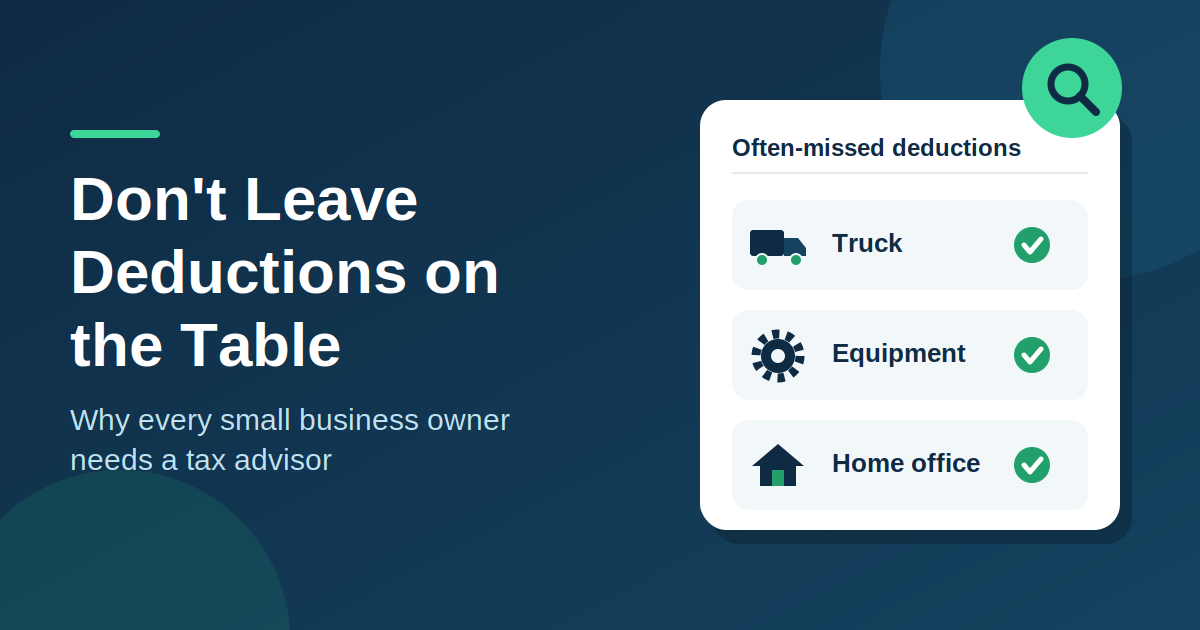
He had missed deductions on his truck, his equipment, and his home office.
Six years of money, gone.
This happens more than you'd think.
Small business owners deal with tax stuff that doesn't come with a manual:
• Self-employment tax that hits harder than most people expect
• Quarterly estimated payments that are easy to forget
• Payroll taxes with strict deadlines
• Messy records that turn filing into a headache
You can figure some of it out on your own.
But one missed deadline or deduction adds up fast.
So what does a small business tax advisor actually do?
A small business tax advisor looks at your whole picture, not just your return.
Here's what they typically handle:
• Pick the right structure. Sole proprietorship, LLC, partnership, or S corp.
• Prepare and file your taxes. On time and done right.
• Find deductions and credits. The ones you didn't know about.
• Review your books. So nothing slips through.
• Back you up in an audit. So you're not facing the IRS alone.
Some also offer tax planning services.
That's where the real savings happen.
Why?
Planning happens before the year ends.
Filing happens after.
That's the difference between saving money and just reporting what happened.
Services to Look for in a Tax Advisor for Small Business
Not every small business tax advisor offers the same things.
Some only file returns.
Others build a plan around your money.
Here's what to look for.
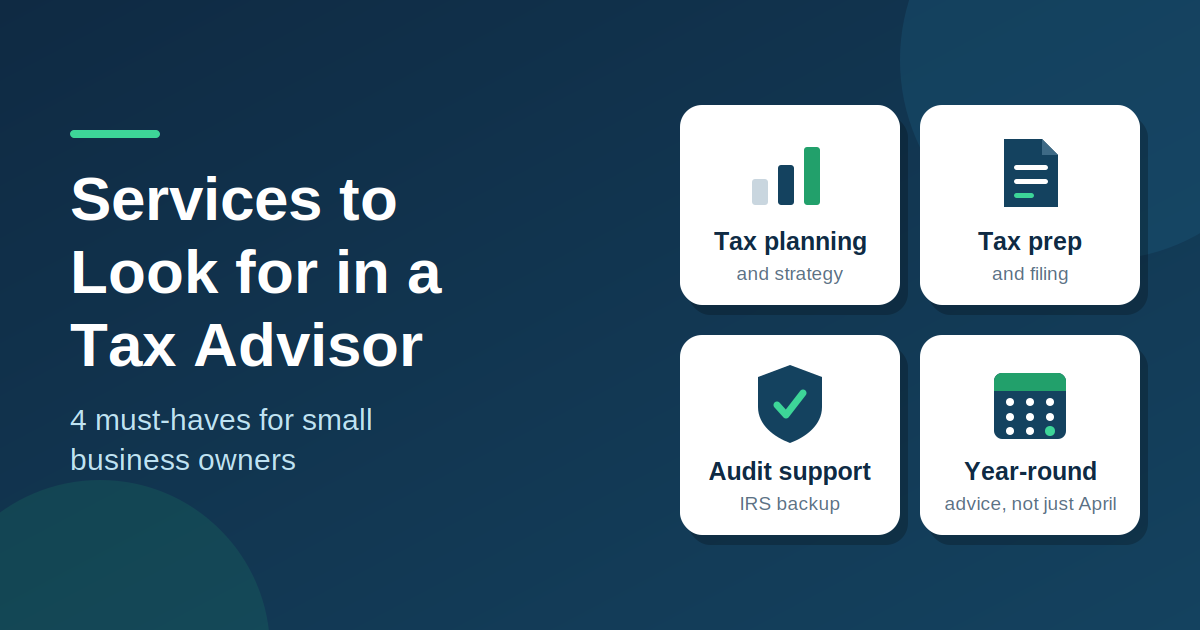
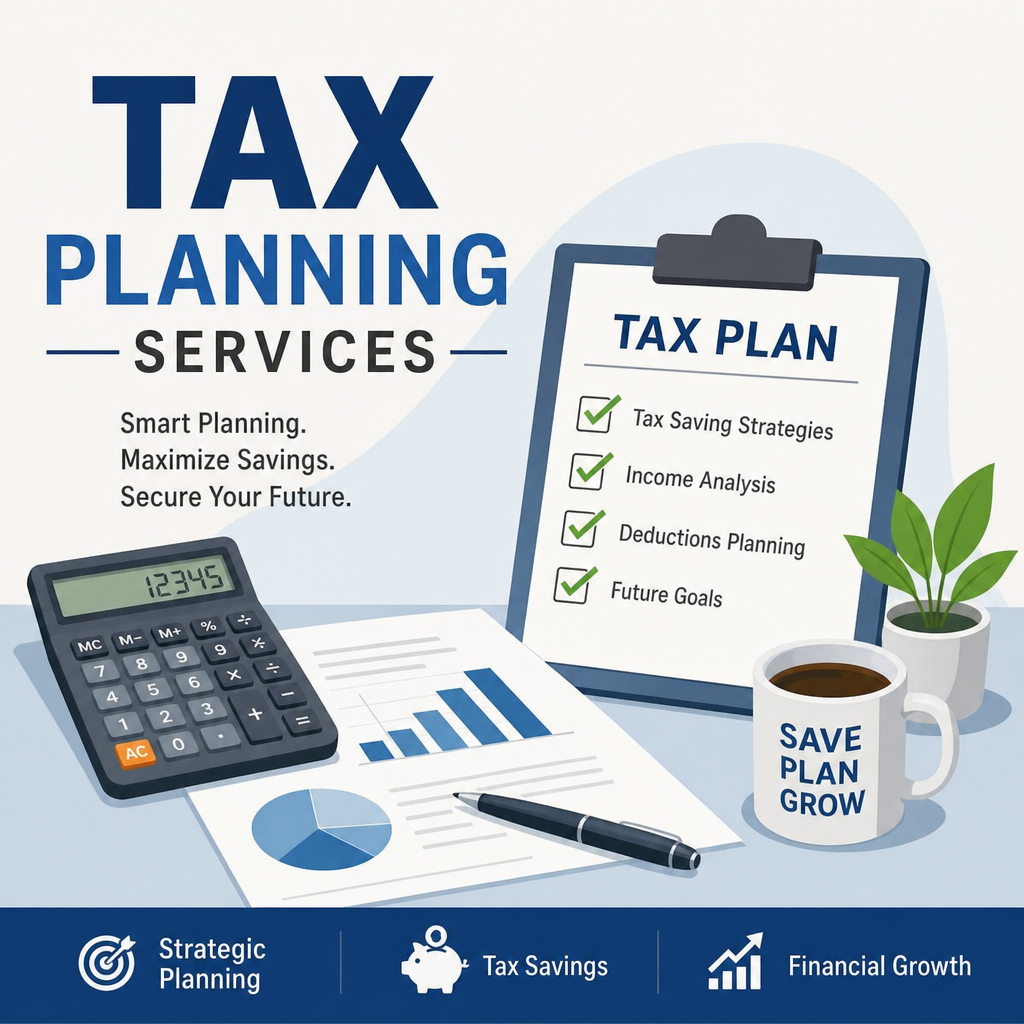
Tax planning and strategy
This is where the savings live.
A good small business tax advisor looks ahead.
They map out your income, your expenses, and your big purchases.
Then they plan your moves before the year ends.
That's the heart of small business tax planning.
Tax prep and filing
You still need your return done right.
Look for someone who handles:
• Federal and state business returns
• Your personal return, if it ties to the business
• Payroll tax filings
• Quarterly estimated payments
Audit support
Nobody wants an IRS letter.
But if one shows up, you want backup.
Ask if they'll represent you.
Ask if that's included or costs extra.
Year-round advice, not just in April
This one matters most.
Your business doesn't stop after tax season.
Neither should your advisor.
If they disappear from May to January, that's a problem.
You want someone you can call before a big decision, not after.
HeyDrew builds its service around this idea.
They say most CPAs wait until the year is over, then try to figure out what happened.
HeyDrew says it puts tax strategies in place throughout the year.
You can see how HeyDrew's assessment works and decide if it fits.
Your must-haves checklist
When you compare any small business tax advisor, look for these:
• Year-round access, not just at tax time
• Proactive planning, not only filing
• IRS representation if you're audited
• Experience with your business type
• Clear pricing before you start
If an advisor checks all five, you're in good shape.
How Your Business Structure and Revenue Change What You Need
Your setup decides what kind of small business tax advisor makes sense.
A freelancer with a side gig has different needs than a company with five employees.
Here's how it breaks down.
Sole proprietor or single-member LLC
This is the simplest setup.
Your business income flows onto your personal return.
But simple doesn't mean cheap.
You pay self-employment tax on your profit.
What you need from a small business tax advisor:
• Help tracking deductions you're allowed to take
• A plan for quarterly estimated payments
• A heads-up on when a different structure could save you money
S corp or partnership
This setup has more moving parts.
S corp owners have to run payroll and pay themselves a reasonable salary.
Partnerships file their own return and hand out K-1s.
What you need from a small business tax advisor:
• Someone who's done these returns before
• Help setting a salary that holds up
• Clean books, so the numbers match
This is where mistakes get expensive.
More income means more tax.
It also means more ways to save.
At this stage, a business tax advisor can help you plan around:
• Structure changes, like switching to an S corp
• Big purchases and equipment
• Hiring and payroll
Quick match: if you're X, look for Y
• Just starting out? Look for a small business tax advisor who explains things simply.
• Running an LLC or S corp? Look for entity experience.
• Growing fast? Look for year-round planning, not just filing.
• Hate surprises in April? Look for someone who plans before year-end.
CPA vs. Enrolled Agent vs. Tax Preparer
Here's something most people don't know.
Anyone can prepare taxes for money.
All they need is a PTIN from the IRS.
That doesn't mean they're all the same.
Who can represent you before the IRS
Three types of pros can stand in for you if the IRS comes knocking:
• CPA (Certified Public Accountant): Passed the CPA exam. Handles accounting, tax prep, and filing.
• Enrolled Agent (EA): Licensed by the IRS. Passed a three-part exam or worked at the IRS for at least five years.
• Tax attorney: Licensed by the state bar. Best for legal tax issues.
A regular tax preparer with only a PTIN isn't in that group.
They can file your return.
They can't fully represent you in an audit.
Where a small business tax advisor fits in
"Small business tax advisor" isn't a license.
It's a job description.
The best small business tax advisor is usually a CPA or an EA who focuses on business owners.
The title matters less than the credentials behind it.
Some people also use the term business tax consultant.
Same rule applies.
Check the license first.
Quick tip: Ask any small business tax advisor, "Are you a CPA, EA, or attorney?"
If they dodge the question, move on.
What to Ask Before You Hire a Small Business Tax Advisor
A first call is your chance to size someone up.
Don't waste it on small talk.
Ask these questions instead.
I've bolded what you want to hear.
1. Are you a CPA, EA, or attorney?
"Yes, and here's my license number."
2. Do you work with businesses like mine?
"Yes, I have clients in your industry."
3. Will you plan with me during the year?
"Yes, we'll check in before big decisions."
4. Who will actually do my taxes?
"I will, or a team I supervise."
5. Will you represent me if I'm audited?
"Yes, and here's what's included."
6. How do you charge?
"Flat fee, hourly, or retainer, and I'll put it in writing."
7. Can you give me examples of what you've saved clients?
"Here's how we found deductions or changed a structure."
8. How fast do you reply?
"Within one or two business days."
Listen for words like planned, restructured, and documented.
Those are good signs.
Watch out for anything that sounds like a shortcut.
Any small business tax advisor worth hiring will answer these without a fuss.
Want some of these answered before you ever pick up the phone?
HeyDrew's assessment is a quick way to see where you stand.
Red Flags to Walk Away From
Some warning signs are easy to spot.
Others sound great until it's too late.
Here's what should send you running from any small business tax advisor:
• They guarantee a big refund. Nobody can promise that before seeing your numbers.
• They won't sign your return. Paid preparers must sign and include their PTIN. No signature, no deal.
• They charge based on your refund. That's a bad incentive.
• They vanish after April. If you can't reach them in July, they're not a planner.
• They push aggressive tricks. Anything that sounds too good to be true usually is.
• They won't show credentials. A real small business tax advisor will gladly share their license.
• They ask you to sign a blank return. Never do this.
Here's a simple test.
If something feels off, it probably is.
A good small business tax advisor makes things clearer, not murkier.
Trust your gut.
Then trust but verify.
You can check a preparer's status through the IRS directory of preparers.
You can also look up their history with the Better Business Bureau.
Small Business Tax Advisor Fees: What You'll Pay
Let's talk money.
What a small business tax advisor costs depends on how they charge.
Here are the three common ways:
• Flat fee: $500 to $5,000
• Hourly rate: $150 to $500
• Annual retainer: $1,000 to $10,000
A flat fee works for simple filing.
Hourly works for one-off questions.
A retainer works if you want year-round help.
What pushes the price up or down
Your final bill depends on a few things:
• How complex your business is. An S corp costs more than a sole proprietor.
• How clean your books are. Messy records mean more hours.
• How much support you want. Filing only is cheaper than planning all year.
• Where you live. Big cities usually cost more.
• Your advisor's experience. Seasoned pros charge more, and often save you more.
Want a deeper look at pricing?
Here's a breakdown of tax strategist cost.
Cheap isn't always cheap
A low fee can cost you if deductions get missed.
Look at what you get, not just what you pay.
A small business tax advisor who plans ahead can save more than they charge.
HeyDrew doesn't list its pricing publicly.
You can take their assessment to see how their year-round planning approach works.
Want a Simpler Way to Start?
Not ready to book a call with a small business tax advisor?
That's fine.
HeyDrew offers a tax-planning service built around year-round strategy.
They say most CPAs wait until the year is over.
HeyDrew says it works on your savings throughout the year.
You can start with a short assessment.
No pressure.
Explore HeyDrew's tax-planning service
Small Business Tax Advisor FAQs
How much does a small business tax advisor cost?
It depends on how your small business tax advisor charges.
Flat fees run about $500 to $5,000.
Hourly rates run $150 to $500, and annual retainers run $1,000 to $10,000.
When should I hire a small business tax advisor?
Earlier than you think.
Hire one when you start your business, change your structure, or hire your first employee.
Don't wait until April.
Is a CPA the same as a small business tax advisor?
Not exactly.
"Tax advisor" is a job description, not a license.
Many advisors are CPAs or enrolled agents, so check credentials first.
Can a tax advisor for small business help with an audit?
Yes, if they're a CPA, EA, or tax attorney.
These pros can represent you before the IRS.
Ask upfront if audit help is included or costs extra.
What does small business tax planning cover?
It covers the moves you make before the year ends.
That includes choosing your structure, timing big purchases, and planning quarterly payments.
It also covers payroll, deductions, and credits.
Final Takeaway
Taxes don't have to feel like a guessing game.
Know what services you need.
Check credentials.
Ask the right questions.
Walk away from red flags.
Do that, and you'll find a small business tax advisor who saves you money and stress.
Take your time, trust your gut, and pick the right small business tax advisor.
Disclosure: This link is an affiliate link. If you sign up, we may earn a commission at no extra cost to you.






Comments
Leave a Comment
Your email address will not be published. Required fields are marked *